
Spring Skin Care: How to Protect Your Skin as the Weather Warms Up
Discover spring skincare tips for warmer weather. Learn how to protect your skin from UV damage, stay hydrated and maintain a healthy skincare routine.

As the weather warms up across Australia, your skin may start to experience a few changes. Longer days, increased outdoor activities, warmer temperatures and higher UV levels can all affect your skin's everyday needs. You might notice more oiliness, sweating, breakouts or dryness, making spring a good time to review your skincare routine.
The best way to care for your skin during spring is to keep it clean, hydrated and protected from the sun. Use a gentle cleanser, moisturise regularly, apply broad-spectrum SPF50 or SPF50+ sunscreen when the UV Index reaches 3 or above, and remember to reapply sunscreen every two hours when outdoors. Wearing protective clothing, seeking shade and using sunglasses also help protect your skin from harmful UV radiation.
Whether you have oily, dry, sensitive or combination skin, a few simple adjustments can help keep your skin comfortable and healthy as the seasons change. Here's what you should know about spring skincare and how to protect your skin as the weather warms up.
Why should you adjust your skincare routine in spring?
As temperatures begin to rise, your skin may respond differently to changes in humidity, sweating, outdoor exposure and daily activities.
During the cooler months, you may have relied on richer moisturisers and heavier skincare products to help manage dryness. As the weather warms up, you might find that these products feel too heavy or leave your skin feeling greasy.
Some common changes you may notice include:
- Increased oil production: Warmer conditions and sweating can make your skin feel oilier, particularly around the forehead, nose and chin.
- More sweating: Sweat can mix with oil, dirt and skincare products, leaving your skin feeling uncomfortable.
- More frequent breakouts: Sweat, excess oil and pore-clogging products may contribute to blemishes.
- Increased sun exposure: Longer days and more outdoor activities can mean greater exposure to UV radiation.
- Dehydrated skin: Sun exposure, wind, air conditioning and inadequate hydration can leave your skin feeling dry or tight.
Not everyone experiences these changes in the same way. Your skin type, existing skincare routine and environmental conditions all play a role.
The goal isn't to completely replace your skincare products every spring. Instead, make small adjustments that suit your skin's changing needs.
7 spring skincare tips to keep your skin healthy
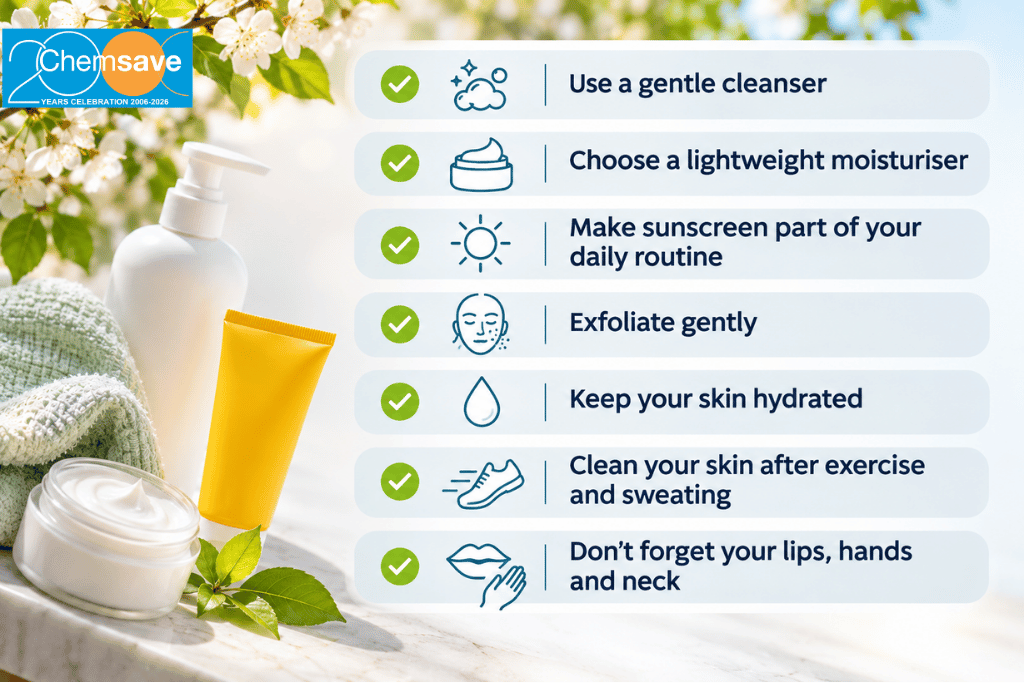
You don't need an elaborate skincare routine to look after your skin. Consistency is more important than using lots of different products.
Here are seven practical ways to care for your skin during the warmer months.
1. Switch to a gentle cleanser
Cleansing is an important part of any skincare routine, especially when you're sweating more frequently.
Throughout the day, your skin can accumulate sweat, excess oil, sunscreen, makeup and environmental dirt. If these aren't removed properly, your skin may feel congested or uncomfortable.
Choose a gentle facial cleanser suited to your skin type.
If you have oily or combination skin, you may prefer a lightweight gel cleanser that helps remove excess oil without leaving your skin feeling stripped.
For dry or sensitive skin, a gentle cream or hydrating cleanser may be more comfortable.
How often should you wash your face?
For most people, washing your face twice a day, once in the morning and once before bed, is a practical routine. You may also want to rinse or gently cleanse your skin after heavy sweating.
Avoid scrubbing your face too aggressively or washing it excessively, as this can irritate your skin and affect its natural protective barrier.
Check out Cetaphil Facial Cleansers
2. Choose a lightweight moisturiser
Just because the weather is warmer doesn't mean your skin no longer needs moisturiser.
Moisturising helps support the skin barrier and reduce moisture loss. Even people with oily skin can experience dehydration, so skipping moisturiser altogether isn't necessarily the best approach.
During spring, you may prefer a lighter formulation that feels comfortable in warmer weather.
Consider these options:
- Gel moisturisers: Often lightweight and comfortable for oily or combination skin.
- Lotion moisturisers: Provide everyday hydration without feeling as heavy as some creams.
- Cream moisturisers: May be more suitable for dry skin that needs richer hydration.
- Fragrance-free moisturisers: Can be a useful option if your skin is sensitive or easily irritated.
Look for products that suit your skin's individual needs rather than choosing something simply because it's marketed for summer or spring.
If your skin feels tight, flaky or uncomfortable after cleansing, your moisturiser may not be providing enough hydration.
3. Make sunscreen part of your daily routine
If there's one skincare habit worth prioritising in Australia, it's sun protection.
UV radiation can damage your skin even when the weather feels cool or cloudy. It's also important to remember that UV levels are not determined by temperature.
According to Cancer Council Australia, sun protection is recommended whenever the UV Index reaches 3 or above. This applies throughout the year, not just during summer.
For everyday protection, choose a broad-spectrum, water-resistant SPF50 or SPF50+ sunscreen. Broad-spectrum sunscreen helps protect against both UVA and UVB radiation.
Here's how to use sunscreen properly:
- Apply sunscreen generously to clean, dry skin.
- Apply it approximately 20 minutes before going outdoors.
- Reapply every two hours when spending time outdoors.
- Reapply after swimming, sweating or towel-drying.
- Don't forget commonly missed areas, including your ears, neck, hands and the back of your neck.
For an average-sized adult, Cancer Council recommends approximately seven teaspoons (35mL) for full-body application, using around one teaspoon for each arm, leg, front and back of the body, and the face including the neck and ears.
Remember that sunscreen should be used alongside other sun protection measures, not as a reason to spend longer in the sun.
For more information, read Cancer Council Australia's guide to preventing skin cancer.
Check out DermaVeen Sensitive Sun SPF50+ Sunscreen Range
4. Exfoliate gently and avoid overdoing it
Exfoliation helps remove dead skin cells from the surface of your skin. Some people find that it helps their skin feel smoother and improves the appearance of uneven texture.
However, more exfoliation doesn't necessarily mean better skin.
Using exfoliating products too frequently or combining several strong active ingredients can irritate your skin, particularly if you have sensitive skin.
There are two common types of exfoliation:
- Physical exfoliation: Uses small particles or textured products to manually remove dead skin cells.
- Chemical exfoliation: Uses ingredients such as alpha hydroxy acids (AHAs) or beta hydroxy acids (BHAs) to loosen dead skin cells.
If you're introducing an exfoliating product, start slowly and follow its directions. Avoid using multiple exfoliating products together unless advised by an appropriate skincare professional.
If your skin becomes red, irritated, unusually dry or uncomfortable, stop using the product and seek advice if the irritation persists.
5. Keep your skin hydrated
Hydration is important for maintaining comfortable, healthy-looking skin.
Warmer weather can mean more time outdoors, increased sweating and greater exposure to air conditioning. These conditions may contribute to dry or dehydrated skin.
A few simple habits can help:
- Drink water regularly throughout the day.
- Use a moisturiser suited to your skin type.
- Avoid excessively hot showers.
- Apply moisturiser after bathing while your skin is slightly damp.
- Avoid harsh cleansers that leave your skin feeling tight.
- Use lip balm to help protect dry lips.
It's also worth remembering that drinking more water isn't a guaranteed solution for every skin concern. Your skin's hydration depends on several factors, including your skin barrier, environment and skincare habits.
Hydralyte Sticks help replace lost fluids and electrolytes to support hydration.
6. Clean your skin after exercise and sweating
Spring often means more outdoor activities, exercise and time in the garden.
While staying active is great for general wellbeing, sweat can leave your skin feeling uncomfortable, particularly when it mixes with oil, sunscreen and dirt.
After exercising or sweating heavily:
- Gently cleanse your face when practical.
- Shower and change out of sweaty clothing.
- Avoid rubbing your face with rough towels.
- Use a clean towel to pat your skin dry.
- Apply moisturiser if your skin feels dry.
If you're prone to body breakouts, avoid staying in sweaty clothing for extended periods.
Also remember to clean items that regularly touch your face, such as mobile phones, makeup brushes and pillowcases.
7. Don't forget your lips, hands and neck
Skincare routines often focus heavily on the face, but other areas of your body also need attention.
Your neck, ears, hands and lips are regularly exposed to the sun and can easily be overlooked when applying skincare and sunscreen.
Make these small habits part of your routine:
- Apply sunscreen to your neck and ears.
- Use SPF lip balm when spending time outdoors.
- Moisturise your hands regularly.
- Wear protective clothing when outdoors.
- Use a broad-brimmed hat to help protect your face, neck and ears.
These simple steps can help you maintain a more complete skincare routine throughout spring and summer.
What is the best skincare routine for spring?
A simple morning and evening routine can help you maintain healthy-looking skin without using too many products.
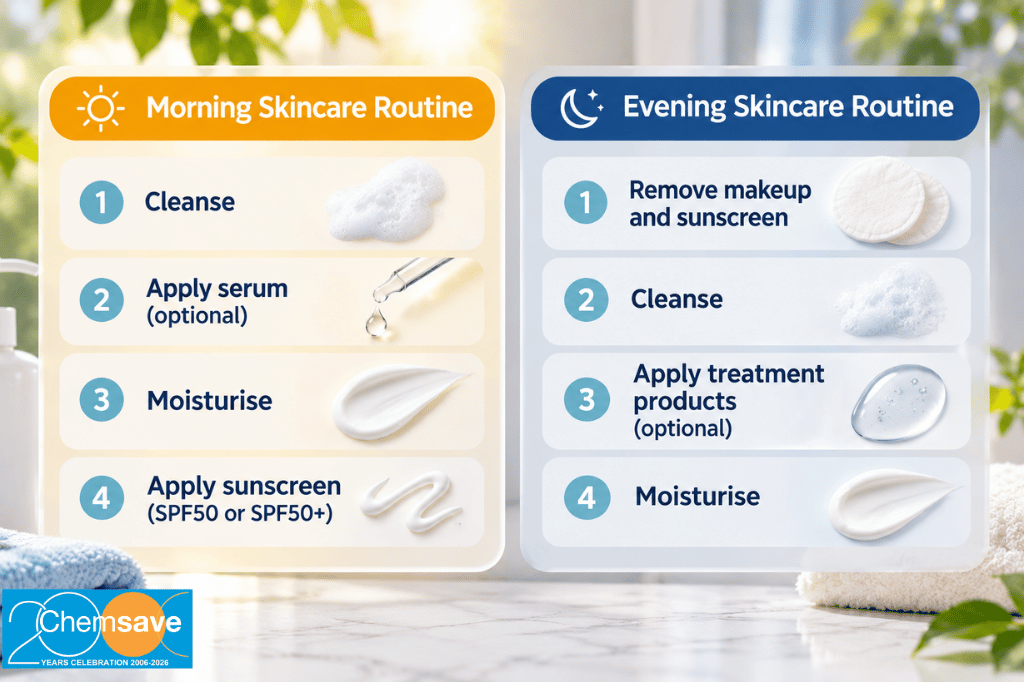
You can adjust the products depending on your skin type and individual concerns.
Morning skincare routine
Your morning routine should focus on cleansing, hydration and sun protection.
Step 1: Cleanse
Wash your face using a gentle cleanser to remove overnight oil and impurities.
Step 2: Apply serum (optional)
If you already use a serum, continue using one that suits your skin. Avoid introducing several new active ingredients at once.
Step 3: Moisturise
Apply a lightweight moisturiser to help maintain your skin barrier.
Step 4: Apply sunscreen
Finish with broad-spectrum SPF50 or SPF50+ sunscreen when the UV Index is 3 or above. Apply it generously and allow it to set before heading outdoors.
Evening skincare routine
Your evening routine should focus on removing the day's buildup and supporting your skin overnight.
Step 1: Remove makeup and sunscreen
Use an appropriate cleanser to remove makeup, sunscreen, sweat and dirt.
Step 2: Cleanse your face
Gently wash your face without scrubbing or irritating your skin.
Step 3: Apply treatment products (optional)
If you use products such as serums or other skincare treatments, follow their instructions and introduce them gradually.
Step 4: Moisturise
Apply your usual moisturiser to help keep your skin comfortable overnight.
You don't need an extensive routine to achieve good skincare habits. A cleanser, moisturiser and sunscreen are a practical starting point for many people.
How should you care for different skin types during spring?
Not all skin types respond to warmer weather in the same way. Understanding your skin type can help you choose suitable products.
Oily skin
If you have oily skin, you may notice increased shine during warmer weather.
Try:
- Using a gentle gel cleanser.
- Choosing lightweight, non-comedogenic moisturisers.
- Looking for sunscreen formulations that feel comfortable on oily skin.
- Avoiding excessive cleansing or harsh products.
Dry skin
Dry skin may feel tight, rough or flaky, even when temperatures increase.
Try:
- Using a gentle, hydrating cleanser.
- Choosing a richer moisturiser if needed.
- Avoiding long, hot showers.
- Applying moisturiser after bathing.
Combination skin
Combination skin can feel oily in some areas and dry in others.
Try:
- Using a gentle cleanser across your face.
- Applying lighter moisturiser to oilier areas.
- Giving drier areas additional hydration if needed.
- Avoiding products that leave your skin feeling excessively dry.
Sensitive skin
Sensitive skin can react to fragrances, certain ingredients and environmental changes.
Try:
- Choosing gentle, fragrance-free products.
- Introducing new skincare products one at a time.
- Testing a new product on a small area of skin first.
- Avoiding unnecessary exfoliation.
- Seeking professional advice if irritation continues.
If you're unsure which products are appropriate for your skin, your pharmacist can help you understand some of the ingredients and skincare options available.
What skincare mistakes should you avoid during spring?
Changing seasons can be a good opportunity to review your skincare habits, but some common mistakes can leave your skin feeling worse.
Here are a few things to avoid.
1. Skipping sunscreen on cloudy days
UV radiation can still reach your skin when the sky is overcast. Check your local UV forecast rather than relying on temperature or cloud cover.
2. Using too many active ingredients
Combining multiple exfoliants, retinoids and other active ingredients without understanding how they work together can irritate your skin.
3. Skipping moisturiser because your skin feels oily
Oily skin still needs hydration. Choose a suitable lightweight moisturiser instead of automatically removing it from your routine.
4. Over-exfoliating
Excessive exfoliation can cause irritation, redness and dryness. Follow product directions and give your skin time to adjust.
5. Forgetting to reapply sunscreen
Applying sunscreen once in the morning isn't enough if you're spending extended periods outdoors. Reapply every two hours and after swimming, sweating or towel-drying.
6. Using expired sunscreen
Always check the expiry date and storage instructions. Cancer Council recommends storing sunscreen below 30°C, as excessive heat can affect its effectiveness.
When should you seek professional skincare advice?
Most everyday skincare concerns can be managed with simple changes to your routine. However, some skin problems may need professional assessment.
Consider speaking with your doctor if you notice:
- Persistent or worsening skin irritation.
- A rash that doesn't improve.
- Unusual changes in the colour or texture of your skin.
- A new or changing mole.
- A sore that doesn't heal.
- Severe or persistent acne.
- Signs of infection, such as increasing redness, swelling, warmth or discharge.
Pay particular attention to changes in moles or spots. If you notice a spot that is changing in size, shape or colour, or a new lesion that concerns you, arrange an assessment with your doctor.
For severe allergic reactions involving difficulty breathing or swelling of the tongue or throat, call Triple Zero (000).
Can a pharmacist help with everyday skincare concerns?
Yes. Your pharmacist can provide general advice about suitable skincare products, moisturisers, sunscreen and some over-the-counter treatments.
They can also help you understand product ingredients, directions for use and whether a particular product may be appropriate for your needs.
If a skin concern is persistent, severe or requires a medical diagnosis, your pharmacist may recommend seeing your GP or another healthcare professional.
At Chemsave, you can explore available pharmacy services and speak with your local pharmacy about the support they offer.
Find Your Nearest Chemsave Pharmacy →
Frequently asked questions about spring skincare
How should I change my skincare routine in spring?
Start by reviewing how your skin feels as temperatures rise. You may prefer a lighter moisturiser, a gentle cleanser and a consistent sunscreen routine. Continue using products that suit your skin and avoid making too many changes at once.
Should I moisturise my skin during warmer weather?
Yes. Moisturiser helps support your skin barrier and reduce moisture loss. Choose a formulation that suits your skin type, such as a lightweight gel or lotion for oily skin or a richer cream for dry skin.
What SPF sunscreen should I use in Australia?
Choose a broad-spectrum, water-resistant SPF50 or SPF50+ sunscreen. Apply it generously and reapply every two hours when outdoors, as well as after swimming, sweating or towel-drying. Use sun protection whenever the UV Index reaches 3 or above.
How often should I wash my face during spring?
For most people, washing their face twice daily is a practical routine. You may also want to cleanse after heavy sweating or exercise. Avoid excessive washing or scrubbing, as this can irritate your skin.
Does warmer weather cause oily skin?
Warmer conditions and increased sweating can make your skin feel oilier. If you notice more shine, consider a gentle cleanser and lightweight moisturiser suited to your skin type.
How can I prevent breakouts during spring?
Cleanse your skin gently, wash after heavy sweating, avoid staying in sweaty clothing and choose skincare products labelled non-comedogenic where appropriate. Avoid excessive exfoliation or harsh cleansers that may irritate your skin.
Is sunscreen necessary on cloudy days?
Yes, if the UV Index is forecast to reach 3 or above. Cloud cover doesn't necessarily prevent harmful UV radiation from reaching your skin, so check the daily UV forecast rather than relying on how sunny it looks outside.
Can I use the same skincare products throughout the year?
Yes, if they continue to suit your skin. You don't need to change every product when the seasons change. However, you may find that adjusting your cleanser or moisturiser makes your routine more comfortable as temperatures and humidity change.
When should I apply sunscreen in my skincare routine?
Apply sunscreen as the final step of your morning skincare routine, after moisturiser. If you're using makeup, apply sunscreen before makeup. Follow the sunscreen label instructions and reapply as recommended.
Give your skin a little extra care this spring
Spring is a great time to refresh your skincare habits and pay closer attention to what your skin needs. Whether you're spending more time outdoors, exercising, gardening or simply enjoying the warmer weather, protecting your skin should remain part of your everyday routine.
Keep things simple: cleanse gently, moisturise regularly, stay hydrated and make sun protection a priority. Remember that sunscreen works best when combined with protective clothing, a hat, sunglasses and shade.
If you're unsure which skincare products are suitable for your needs, your local Chemsave pharmacist can help you explore your options and provide general advice.
Looking for pharmacy services or professional advice?
Explore Chemsave Pharmacy Services →
Find a Chemsave Pharmacy Near You →
Disclaimer: This article provides general health and skincare information for Australian consumers and is not a substitute for personalised medical advice, diagnosis or treatment. Always follow product instructions and seek advice from a healthcare professional if you have persistent skin concerns or an adverse reaction to a skincare product.