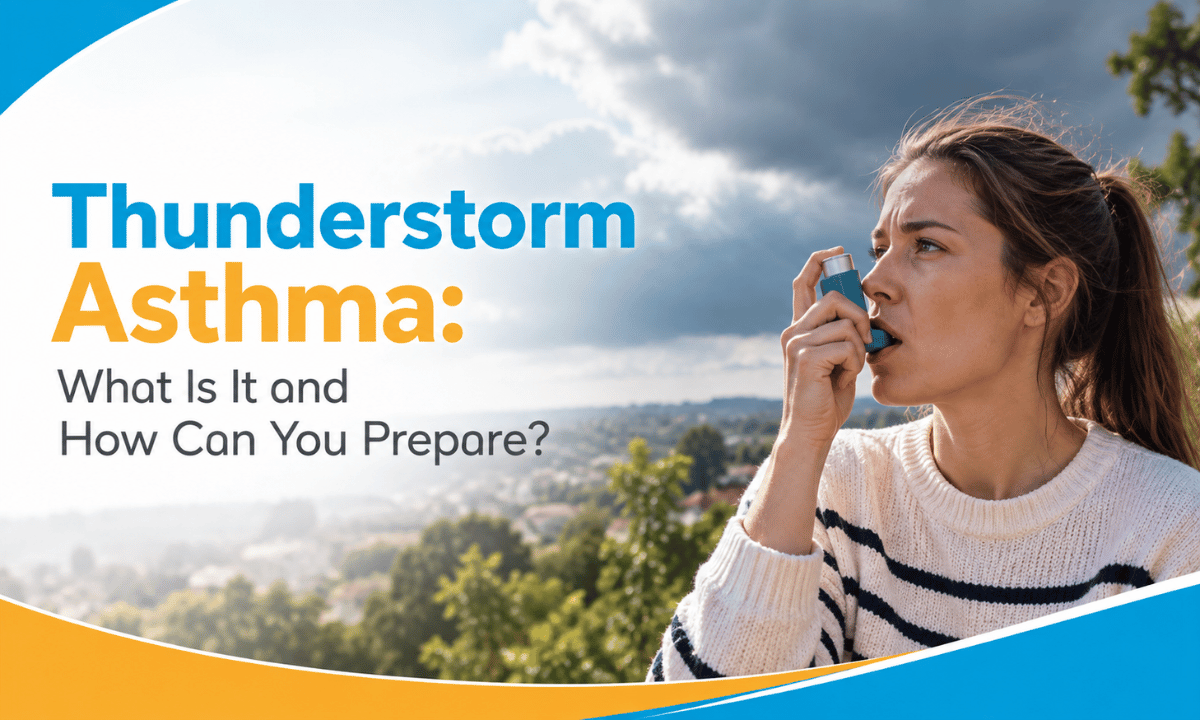
Thunderstorm Asthma: What Is It and How Can You Prepare?
Learn what thunderstorm asthma is, who is at risk, the warning signs and how to prepare during Australia's spring grass pollen season.
Spring can bring warmer weather and beautiful blooms, but it can also bring higher grass pollen levels and an increased risk of thunderstorm asthma. If you have hay fever, asthma or a known sensitivity to grass pollen, understanding the risks and knowing how to prepare can help you stay safer during spring and early summer.
Thunderstorm asthma is asthma triggered by a combination of high grass pollen levels and thunderstorm conditions. During a thunderstorm, pollen grains can absorb moisture, rupture into much smaller particles and become concentrated in the air. These tiny particles can be inhaled deep into the lungs and trigger asthma symptoms, sometimes very quickly.
Thunderstorm asthma usually occurs during spring and early summer, particularly during the grass pollen season. Importantly, you don't necessarily need to have previously been diagnosed with asthma to experience asthma symptoms during a thunderstorm. People with seasonal hay fever caused by grass pollen are among those at greatest risk.
Knowing the warning signs, checking pollen and weather conditions, managing hay fever and asthma appropriately, and knowing what to do if symptoms develop are important parts of being prepared.
What is thunderstorm asthma?
Thunderstorm asthma is an asthma reaction triggered by the combination of grass pollen and thunderstorm conditions.
As a thunderstorm develops, strong winds can lift grass pollen into the air. Moisture from the storm can cause pollen grains to swell and rupture, releasing very small particles containing pollen allergens.
These particles can be much smaller than intact pollen grains. They can travel in the air and be inhaled deeper into the lungs, where they may trigger inflammation and asthma symptoms in susceptible people.
The risk can be particularly high during the wind gusts that occur before the rain arrives. This means that being outside just before a thunderstorm can be risky for people who are susceptible to thunderstorm asthma.
Thunderstorm asthma is most commonly associated with spring and early summer because this is when grass pollen can be present at high levels in many parts of Australia. However, pollen seasons vary depending on location and the types of grasses and other plants in an area.
Who is most at risk of thunderstorm asthma?
People most at risk of thunderstorm asthma include those with seasonal hay fever caused by grass pollen, people with current or previous asthma, and people who have asthma that has not yet been diagnosed.
According to healthdirect, adults who are sensitive to grass pollen and have seasonal hay fever have the highest risk. You can experience thunderstorm asthma even if you've never previously been diagnosed with asthma.
You may be at increased risk if you:
- Have seasonal hay fever, particularly grass-pollen hay fever
- Have current asthma
- Have had asthma in the past
- Experience coughing or wheezing during spring
- Have experienced breathing problems around grass pollen
- Have asthma that isn't well controlled
- Have symptoms of asthma but haven't been formally diagnosed
Having both asthma and seasonal hay fever can increase the risk further. Asthma Australia also identifies people with hay fever, current or previous asthma, springtime asthma symptoms or grass-pollen sensitivity as groups that should take particular care during the pollen season.
If you regularly experience hay fever symptoms during spring and occasionally develop coughing, wheezing, chest tightness or difficulty breathing, don't assume these symptoms are simply part of your allergies. Speak with your doctor about whether you may also have asthma.
What are the symptoms of thunderstorm asthma?
The main symptoms of thunderstorm asthma include shortness of breath, wheezing, chest tightness and a persistent cough. Symptoms can become worse very quickly.
Watch for:
- Shortness of breath
- Difficulty breathing
- Wheezing
- Chest tightness
- Persistent or ongoing coughing
These symptoms can range from mild to severe, but thunderstorm asthma can escalate quickly.
This is different from the more familiar symptoms of hay fever, such as sneezing, an itchy or blocked nose and itchy, watery eyes. However, hay fever and asthma can occur together, and pollen can trigger both upper-airway allergy symptoms and asthma symptoms.
Hay fever symptoms vs asthma symptoms
It can be useful to recognise the difference.
Hay fever commonly causes:
- Sneezing
- Runny or blocked nose
- Itchy nose or throat
- Itchy, watery or red eyes
Asthma symptoms commonly include:
- Wheezing
- Shortness of breath
- Chest tightness
- Persistent coughing
If you suddenly develop breathing difficulties during or around a thunderstorm, particularly if grass pollen levels are high, don't assume it is simply hay fever.
Why can thunderstorms trigger asthma?
Thunderstorm asthma is linked to a specific combination of grass pollen, moisture and strong winds.
During a thunderstorm, pollen can be lifted from the ground into the atmosphere. The pollen grains can absorb moisture and rupture, releasing smaller allergen-containing particles.
Strong winds associated with the storm can then push these particles down towards ground level. When inhaled, the particles can travel deep into the lungs and trigger asthma symptoms in susceptible people.
The timing is important.
The risk isn't necessarily limited to the period when heavy rain is falling. The strong winds and gusts before a storm can carry the pollen particles through the air.
For this reason, if you are at risk, it is important to get indoors before a storm arrives rather than waiting until the rain begins.
When is thunderstorm asthma most common?
Thunderstorm asthma is most commonly associated with spring and early summer, when grass pollen levels can be high.
However, the exact pollen season differs across Australia.
Healthdirect notes that grass allergy seasons vary between regions. In some northern coastal areas, grass pollen seasons occur earlier in the year, while southern Australia generally experiences its main grass pollen season later in the year.
This means the risk isn't identical everywhere.
If you live in an area where grass pollen is high during spring, it's particularly important to pay attention to local pollen information and weather forecasts.
How can you prepare for thunderstorm asthma?
The best way to prepare for thunderstorm asthma is to manage hay fever and asthma, understand your personal risk, monitor pollen and weather conditions, and avoid exposure when thunderstorms are approaching.
Here are practical steps you can take.
1. Know whether you're at risk
If you have hay fever, particularly seasonal hay fever caused by grass pollen, speak with your doctor or pharmacist about your risk of thunderstorm asthma.
This is especially important if you have ever experienced:
- Wheezing
- Chest tightness
- Shortness of breath
- Persistent coughing during spring
- Breathing difficulties around grass or pollen
If you've never been diagnosed with asthma but develop asthma-like symptoms, see your doctor for assessment. Thunderstorm asthma can occur in people without a previous asthma diagnosis.
2. Keep your asthma management plan up to date
If you have asthma, speak with your doctor about your asthma management before and during the pollen season.
An up-to-date Asthma Action Plan can help you understand what medicines to use, when to use them and what to do if your symptoms become worse.
Healthdirect recommends developing an asthma action plan with your doctor and reviewing your treatment regularly.
If you've been prescribed an asthma preventer, make sure you use it as directed.
Your treatment plan should be personalised to your circumstances, so don't change prescribed asthma medicines without discussing this with your healthcare professional.
3. Keep your reliever with you
If you have asthma and have been prescribed a reliever, make sure you have it readily available, particularly during the grass pollen season.
Healthdirect recommends that people at risk of thunderstorm asthma carry their reliever during pollen season.
It can be easy to leave your inhaler at home when you're heading out for the day, but being prepared is particularly important when weather and pollen conditions could increase your risk.
4. Check pollen levels
Checking local pollen information can help you understand when your exposure risk may be higher.
Healthdirect recommends checking pollen information alongside weather forecasts. Depending on where you live, information may be available through services such as the Australian Pollen Allergen Partnership or AirRater.
Pollen levels can vary from day to day, so make checking conditions part of your spring routine if you're sensitive to pollen.
5. Keep an eye on the weather forecast
A high pollen day combined with thunderstorms can create conditions that increase the risk of thunderstorm asthma.
Pay attention to local weather forecasts and warnings, particularly if thunderstorms are predicted.
The Bureau of Meteorology provides weather forecasts and radar information that can help you monitor approaching storms.
6. Go indoors before the storm arrives
If you are at risk of thunderstorm asthma and a thunderstorm is approaching on a high-pollen day, go indoors before the storm arrives.
This is particularly important because the strongest winds can occur before the rain.
Healthdirect and the Victorian Department of Health recommend avoiding exposure to storms and going inside when conditions indicate increased risk.
Don't wait until the thunderstorm is directly overhead.
7. Close doors and windows
When you're indoors during a high-risk period, close your doors and windows to reduce the amount of outdoor air entering your home.
If you use air conditioning, healthdirect recommends turning it off or setting it to recirculate air rather than drawing in outdoor air.
The same principle applies when you're travelling in a car: keep windows closed and use the recirculating air setting where appropriate.
8. Don't mow the lawn on high-pollen days
Mowing grass can increase exposure to grass pollen.
If you're sensitive to grass pollen, avoid mowing where possible, particularly when pollen levels are high.
If someone else is mowing, stay indoors while the lawn is being cut and for a period afterwards if practical. Healthdirect recommends avoiding mowing as one way of reducing grass-pollen exposure.
9. Manage your hay fever
Managing hay fever is an important part of reducing your overall pollen-related risk.
If you regularly experience seasonal hay fever, speak with your pharmacist or doctor about suitable treatment options.
Depending on your symptoms, treatments may include antihistamines or nasal sprays. Your pharmacist can help you understand which options may be suitable for you and how to use them correctly.
If you have hay fever and experience wheezing, coughing, chest tightness or shortness of breath, speak with your doctor about whether you may also have asthma.
Can thunderstorm asthma be prevented?
Thunderstorm asthma cannot always be prevented, but you can reduce your risk by managing hay fever and asthma, monitoring pollen and weather conditions, and avoiding thunderstorms when pollen levels are high.
If you're at risk:
- Know your triggers.
- Manage your hay fever.
- Follow your asthma treatment plan if you have asthma.
- Keep your reliever available if it has been prescribed for you.
- Monitor local pollen levels.
- Check weather forecasts.
- Go indoors before an approaching storm.
- Close doors and windows.
- Avoid outdoor activities during high-risk conditions.
There is no guarantee that avoiding pollen completely will be possible, but reducing exposure during high-risk conditions can help.
Do face masks protect against thunderstorm asthma?
A standard face mask should not be relied upon as protection against thunderstorm asthma.
Healthdirect specifically advises that face masks do not protect against the tiny particles associated with thunderstorm asthma.
If you are at risk, the most important steps are to avoid exposure to storm conditions, stay indoors, close windows and doors, and follow your asthma management plan.
What should you do if thunderstorm asthma symptoms start?
If you develop asthma symptoms during or following a thunderstorm, follow your written Asthma Action Plan if you have one and use your asthma medicine as prescribed.
If your symptoms are mild or moderate, follow the instructions in your action plan and use your reliever as directed.
However, asthma symptoms can become severe quickly.
If you are having severe difficulty breathing or experiencing signs of a severe asthma attack, call Triple Zero (000) immediately and ask for an ambulance.
Signs of a severe asthma attack can include:
- Severe difficulty breathing
- Gasping for breath
- Being unable to breathe normally
- Being unable to speak more than a few words at a time
- Pale or blue-coloured lips
- Severe or rapidly worsening symptoms
If you are experiencing severe breathing difficulty, don't wait for symptoms to settle on their own.
What if you've never had asthma before?
This is an important question because you can experience thunderstorm asthma even if you've never previously been diagnosed with asthma.
If you develop wheezing, chest tightness, persistent coughing or shortness of breath during or following a thunderstorm, seek medical advice. Healthdirect recommends seeing a doctor if you experience asthma symptoms for the first time during a thunderstorm.
A doctor can assess your symptoms, medical history and breathing and determine whether further testing or an allergy assessment may be appropriate.
Don't assume recurring springtime breathing problems are simply part of hay fever.
Can a pharmacist help with hay fever and asthma?
Yes. A pharmacist can help you understand options for managing hay fever and can provide advice about medicines that may help relieve allergy symptoms.
Your pharmacist can talk to you about:
- Your hay fever symptoms
- How frequently your symptoms occur
- Possible pollen triggers
- Appropriate over-the-counter treatment options
- How to use nasal sprays correctly
- When you should speak with your doctor
However, asthma management should be discussed with your doctor, particularly if you have new, recurring or worsening breathing symptoms.
If you're unsure about your symptoms or treatment options, your local Chemsave pharmacist can help you understand what support may be available.
Book a service at your local Chemsave pharmacy →
Chemsave pharmacies offer a range of professional pharmacy services, although services can vary between individual pharmacies.
Find your nearest Chemsave pharmacy →
Thunderstorm asthma: Frequently asked questions
What is thunderstorm asthma?
Thunderstorm asthma is asthma triggered by a combination of thunderstorm conditions and high levels of grass pollen. Moisture and strong winds can cause pollen to break into tiny particles that can be inhaled deep into the lungs and trigger asthma symptoms.
What are the symptoms of thunderstorm asthma?
Common symptoms include shortness of breath, wheezing, chest tightness and persistent coughing. Symptoms can become worse quickly.
Who is most at risk of thunderstorm asthma?
People with seasonal hay fever caused by grass pollen are among those at greatest risk. People with current, previous or undiagnosed asthma may also be at risk.
Can you get thunderstorm asthma without having asthma?
Yes. Thunderstorm asthma can occur in people who have never previously been diagnosed with asthma. If you experience asthma symptoms for the first time during a thunderstorm, you should see your doctor.
When is thunderstorm asthma season in Australia?
Thunderstorm asthma is usually associated with spring and early summer, when grass pollen levels can be high. The timing varies between different parts of Australia.
Does hay fever increase the risk of thunderstorm asthma?
Yes. Seasonal hay fever, particularly when caused by grass pollen, is a significant risk factor for thunderstorm asthma. Adults who are sensitive to grass pollen and have seasonal hay fever are among those at highest risk.
Should I stay inside during a thunderstorm?
If you are at risk of thunderstorm asthma, particularly on a high-pollen day, you should stay indoors before, during and after thunderstorms where possible. Close doors and windows and avoid exposure to the strong winds that can occur before the storm.
Does rain make pollen worse?
Thunderstorm asthma is not simply caused by rain. It is associated with a combination of grass pollen and thunderstorm conditions. Moisture can cause pollen grains to rupture into smaller particles, while strong winds can carry those particles through the air.
Can thunderstorm asthma be life-threatening?
Yes. Severe asthma attacks can be life-threatening. If you or someone else is experiencing severe difficulty breathing or signs of a severe asthma attack, call Triple Zero (000) immediately.
Be prepared this spring
For most people, spring means enjoying warmer weather, longer days and more time outdoors. But if you have hay fever, asthma or a sensitivity to grass pollen, spring is also a good time to think about your respiratory health.
The key is preparation.
Know your symptoms and triggers, manage your hay fever, follow your asthma management plan if you have one, check pollen and weather conditions, and get indoors before thunderstorms arrive when conditions are high risk.
If you're experiencing hay fever symptoms or are unsure about treatment options, speak with your local pharmacist.
Book a service with Chemsave →
Find your nearest Chemsave pharmacy →
And remember: if you develop severe difficulty breathing or signs of a severe asthma attack, call Triple Zero (000) immediately.
This article provides general health information for Australian consumers and is not a substitute for individual medical advice, diagnosis or treatment. Always follow your prescribed asthma management plan and speak with your doctor or pharmacist about your individual circumstances. In an emergency, call Triple Zero (000).